Facebook
 X
X
 Pinterest
 Copy Link
How Long do Appliances and Household Fixtures Last?

Every home is made up of dozens of moving parts, and none of them last forever. From appliances and flooring to roofing and siding, every component has a general life expectancy. Knowing how long these items typically last can help homeowners plan for repairs, budget for future updates, and make informed decisions when buying or selling a home.
We’re all familiar with the cliché: They just don’t build things like they used to. And while this may be true when it comes to brick siding or slate roofing, lifespans of other household components have increased in recent years. The following guide outlines the average life expectancy of common household components, based on data from the National Association of Home Builders (NAHB) along with industry estimates.
Appliances:
Among all household components, appliances tend to have the shortest lifespan because they experience daily wear and tear. Advances in technology have improved efficiency, but modern appliances also include more electronic parts, which can lead to repairs or replacement sooner than older models. Proper maintenance can help extend the life of most appliances, but these averages provide a general guideline for planning ahead.
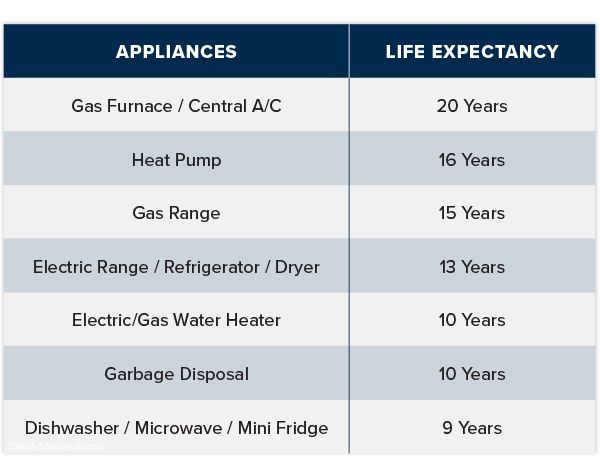
Signs It May Be Time to Replace an Appliance
Even if an appliance hasn’t reached the end of its expected lifespan, certain warning signs may mean replacement is the better option. Frequent repairs, rising energy bills, inconsistent performance, or unusual noises can all indicate that a system is wearing out.
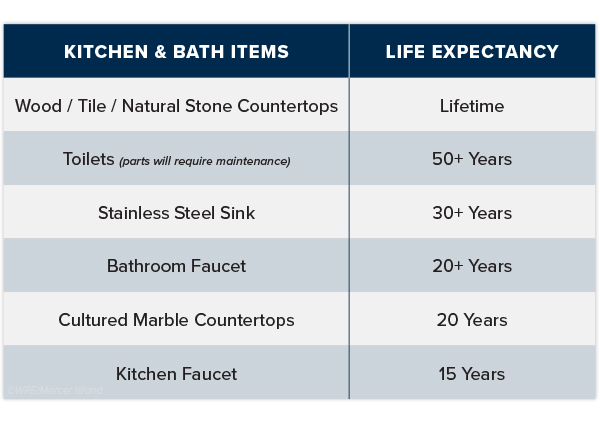
Kitchen & Bath:
Kitchens and bathrooms see constant use, so fixtures and finishes in these spaces often wear out faster than other parts of the home. When choosing your countertops, sinks, and faucets, it helps to consider both style and durability. Some natural materials can last a lifetime, while others may need updating after a couple of decades depending on use and maintenance.
Flooring:
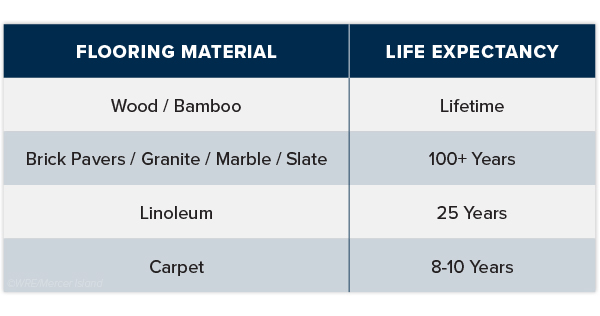
Flooring plays a major role in both the look and function of a home, but different materials have very different lifespans. High-traffic areas will naturally wear faster, while proper care and refinishing can extend the life of many surfaces. If you’re looking for longevity, wood floors are the way to go. Certain rooms in your home will be better suited for carpeting, but you can expect they’ll need replacing within a decade.
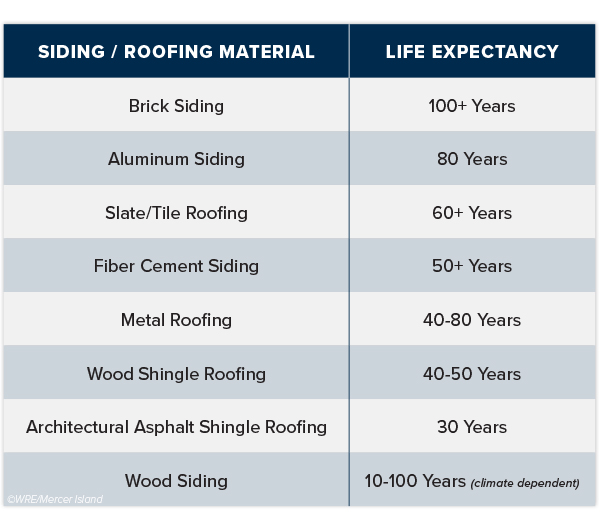
Siding & Roofing:
When choosing roofing and siding for your home, climate and maintenance level factor into the life expectancy of the material. However, brick siding and slate roofing are known to be dependable for decades.
Windows:
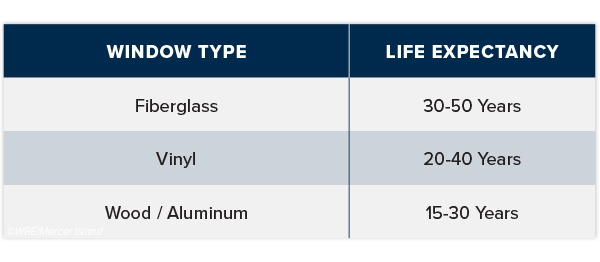
How long your windows last will vary based on moisture/wind/sun exposure and maintenance, but below is what you can expect based on material type. Wood windows also require periodic sealing/painting upkeep during their lifespan.
Are extended warranties warranted?
Extended warranties, also known as service contracts or service agreements, are sold for all types of household items from appliances to electronics. They cover service calls and repairs for a specified time beyond the manufacturer’s standard warranty.
You will have to consider whether the cost is worth it to you. For some, it brings a much-needed peace of mind when making such a large purchase. Also consider if the cost outweighs the value of the item. In some cases, it may be less expensive to replace a broken appliance than to pay for insurance or a warranty.
Staying informed about the lifespan of your home’s appliances and systems can make homeownership more manageable and help you plan ahead with confidence. If you’re thinking about buying, selling, or making updates to your home, I can help you understand which improvements matter most in today’s market.

Adapted from an article that originally appeared on the Windermere Blog

We earn the trust and loyalty of our brokers and clients by doing real estate exceptionally well. The leader in our market, we deliver client-focused service in an authentic, collaborative, and transparent manner and with the unmatched knowledge and expertise that comes from decades of experience.
© Copyright 2026, Windermere Real Estate/Mercer Island.
Chill Out: 5 Ways to Cool Your Home

Those dog days of summer are right around the corner, with El Niño also on its way and a season that’s predicted to lean even hotter than usual. Is your home ready to beat the heat? There are more approaches to cooling than many homeowners realize, with options to fit most budgets. Taking the plunge and installing air conditioning may also add value to your home when it’s time to sell. Here are 5 ways to chill out…
1. Install an Attic Fan
A more budget-friendly alternative to air conditioning, attic fans vent out hot air as it collects below the roofline. This makes a big difference for upper level rooms or 1-level homes that would normally be exposed to that heat radiation. Even if you already have A/C, an attic fan can help cut your cooling costs…by reducing the attic temperature by 10-20 degrees, contractors estimate that they reduce strain on your A/C system by about 30%. Just make sure your ceiling insulation is up to code so that you don’t inadvertently flush out your home’s cool interior air.
Standard fans need to be hardwired into your home’s electrical system. You can also opt for solar-powered fans that operate independently and are less expensive to install…BUT they’re usually less powerful than hard-wired versions.
2. Plant Shade Trees
Strategically planting trees along the southern side of your house is one of the most affordable and eco-friendly ways to keep your house cool. Consider choosing deciduous trees that will offer shade in the summer, then lose their leaves and allow light through in wintertime. Looking for a quick fix? Washington Hawthorn is a flowering tree that thrives in our climate and grows at a moderately fast rate of 1-2 feet per year. Even faster growing varieties to consider are willows, red maples, tulip trees, and certain varieties of oak like the Northern Red and hardy Nuttall. The birds and squirrels will thank you, too!

3. Incorporate Ceiling Fans
While they don’t reduce the air temperature, the breeze produced by ceiling fans does make you feel cooler. They can also help colder air circulate in at night. Even if you if you already have air conditioning, experts estimate that using a ceiling fan can allow you to raise your thermostat by 2 degrees…this translates to a 14% reduction in air conditioning costs over the course of the cooling season. Just make sure you set the blades to run downward (counter-clockwise) to create a draft. Bonus: ceiling fans are also helpful in wintertime to circulate rising warm air throughout the room; just lower the speed and reverse blades so they’re running clockwise.
4. Add A/C to Key Rooms
Ductless mini split heat pumps have drastically increased in popularity in the past several years thanks to their efficiency and cost effectiveness. As opposed to cooling the whole house, they give you the ability to cool only the rooms you use most (and also provide heat in the wintertime). Window units or portable air conditioners can provide similar singular-room cooling for a lot less than central air. These are also good choices for homes that don’t have the ducting required for A/C. While installing multiple mini splits can be costlier than central air, their higher efficiency will save you money each month with lower cooling costs.

5. Invest in Whole House A/C
A central forced-air cooling system is the best way to keep your whole house at a consistent temperature. Unlike mini-splits and portable units that are visible and can appear unsightly to some people, a central air system allows you to keep a clean look since the main unit is hidden out of sight. If you already have existing ductwork, it’s also usually less expensive to install than multiple mini split units. All that extra cooling does add to your monthly electric bill so look for an energy-efficient model. If it’s also time to replace your heating furnace, consider an Energy Star certified ducted heat pump. If you’re a PSE customer, rebates may be also available for switching to a heat pump.
Curious to know how these cooling improvements may affect your home’s value?
I am always happy to give you my expert opinion. Reach out any time to chat.

We earn the trust and loyalty of our brokers and clients by doing real estate exceptionally well. The leader in our market, we deliver client-focused service in an authentic, collaborative, and transparent manner and with the unmatched knowledge and expertise that comes from decades of experience.
© Copyright 2026, Windermere Real Estate/Mercer Island.